The K2 Base Camp trek is one of the great mountain walks on earth. It follows the Baltoro Glacier deep into the Karakoram, past Trango Towers and Masherbrum, to Concordia, where four of the world's highest peaks stand around one glacier junction. It is also a serious expedition-style trek in a remote, regulated area. This guide explains the permits, the season, how the logistics work and how to sort out your Pakistan visa, so you can plan with clear eyes.
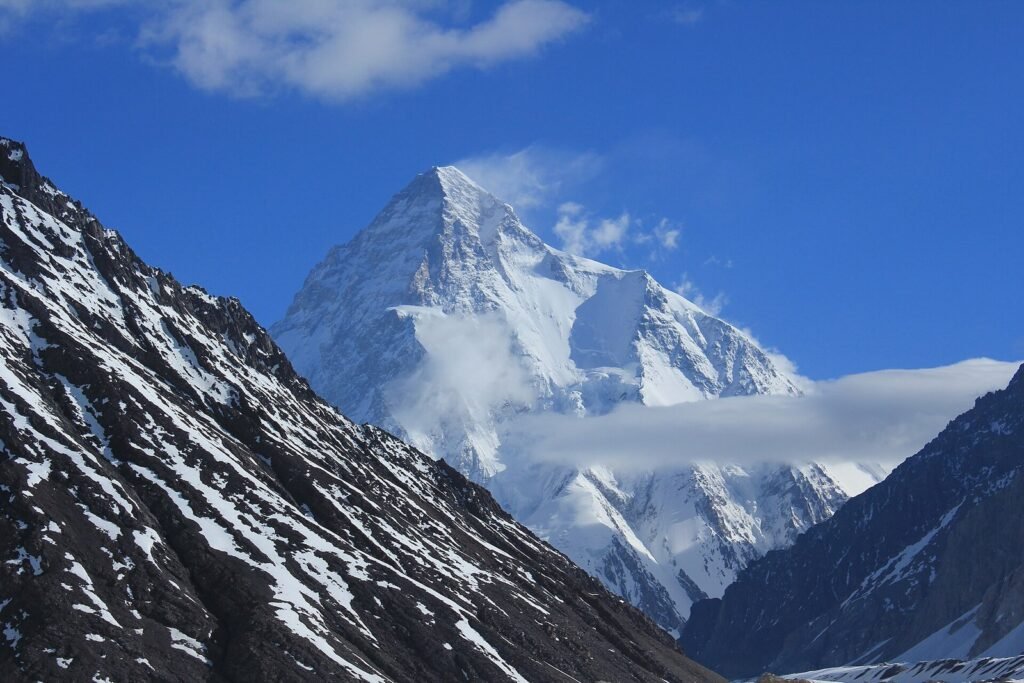
K2 Base Camp trek at a glance
| Topic | What to know |
|---|---|
| Location | Central Karakoram National Park (CKNP), Gilgit-Baltistan, Pakistan |
| Gateway town | Skardu, reached by air or road from Islamabad |
| Trailhead | Askole, about 6 to 7 hours by jeep from Skardu |
| Main route | Askole to Paiju, along the Baltoro Glacier to Concordia and K2 Base Camp, then return (or exit over Gondogoro La) |
| Season | Roughly mid-June to early September, with mid-July to August the peak |
| Typical trip length | Around three weeks door to door from Islamabad, depending on route and weather days |
| Solo trekking | Not allowed in the CKNP core zone |
| Visa | Pakistan e-Visa, applied for before you travel |
Trip length, jeep times and fees in this guide are approximate. Your licensed operator will confirm the current figures and itinerary.
Permits for the K2 Base Camp trek
The Baltoro is not an open area where you simply walk in. Two layers of paperwork usually apply: the trekking permit for the restricted zone and the national park entry.
Trekking permit
Treks into restricted areas of Gilgit-Baltistan, such as the Baltoro, need a trekking permit. According to the Alpine Club of Pakistan, as reported by ExplorersWeb, trekkers submit their documents through a local accredited tour operator, which forwards them to the authorities. Allow four to six weeks before departure. In practice, this means you book the trek through a licensed Pakistani operator, and it handles the application for you.
Central Karakoram National Park entry
The CKNP site states that entering the core zone (Baltoro, Biafo, Hispar, Snow Lake and the Hushe side) needs a park trekking permit and a per-person park fee. Applications are handled at the CKNP office in Skardu or at the Askole and Hushe checkpoints. Documents usually include passport copies, a copy of your visa page, your itinerary and an operator authorization letter.
Rules on the trail
- No solo trekking in the core zone. You need at least one registered porter, and groups of three or more need a registered guide, according to CKNP.
- Technical passes such as Gondogoro La require a guide certified by the Alpine Club of Pakistan.
- Porter loads are capped, and porters are hired through associations at the trailhead.
- Waste rules apply. Expect to carry out what you carry in.
Fees are set by Gilgit-Baltistan authorities and change from year to year. Published figures vary between sources, so we do not quote a number here. Ask your operator for the current permit and park fees in writing.
Climbing above 6,500 m is different
If you plan to climb a peak rather than trek, the rules change. Peaks above 6,500 m need a mountaineering permit with higher fees, a liaison officer and a longer lead time. That is a separate process from the trekking permit, and your expedition operator will advise on it, including any visa questions.
Best season for the K2 Base Camp trek
The trekking window is short. The CKNP site describes the year roughly like this:
| Period | Conditions |
|---|---|
| May | High passes and upper Baltoro still closed |
| Mid-June to mid-July | Baltoro opens; first teams reach Concordia and K2 Base Camp; weather can be unsettled |
| Mid-July to August | Peak season; most visitors of the year; more stable weather |
| September | Shoulder season with light traffic; first snow at Concordia often arrives mid to late September |
| October to April | High-altitude trekking closed |
If you want July or August, contact operators early. The CKNP site suggests booking by June for July arrivals. Remember that visa processing takes time too, so work backward from your start date.
Getting to Skardu and the trailhead
- Fly into Islamabad. Almost all international trekkers start here.
- Islamabad to Skardu. A flight of about one hour, weather permitting. Flights are often delayed or cancelled, so keep two spare days. The alternative is a long road journey of 22 to 26 hours. If you drive, check your government's advice on road routes; the UK advises against all travel on the Karakoram Highway between Mansehra and Chilas.
- Skardu to Askole. About 6 to 7 hours by jeep on a rough road that can close after rain or rockfall.
- Askole onward on foot. From Askole the trail heads to Jhola and Paiju, then onto the Baltoro Glacier.
Beyond Paiju, the nearest road is days away on foot. That remoteness is what makes the trek special, and it is also why preparation matters.
Want us to handle your Pakistan visa?
One short form, US$149 per traveller plus the government fee, with your Letter of Invitation included. Only need the letter? It is US$49. We file it and keep you updated on WhatsApp.
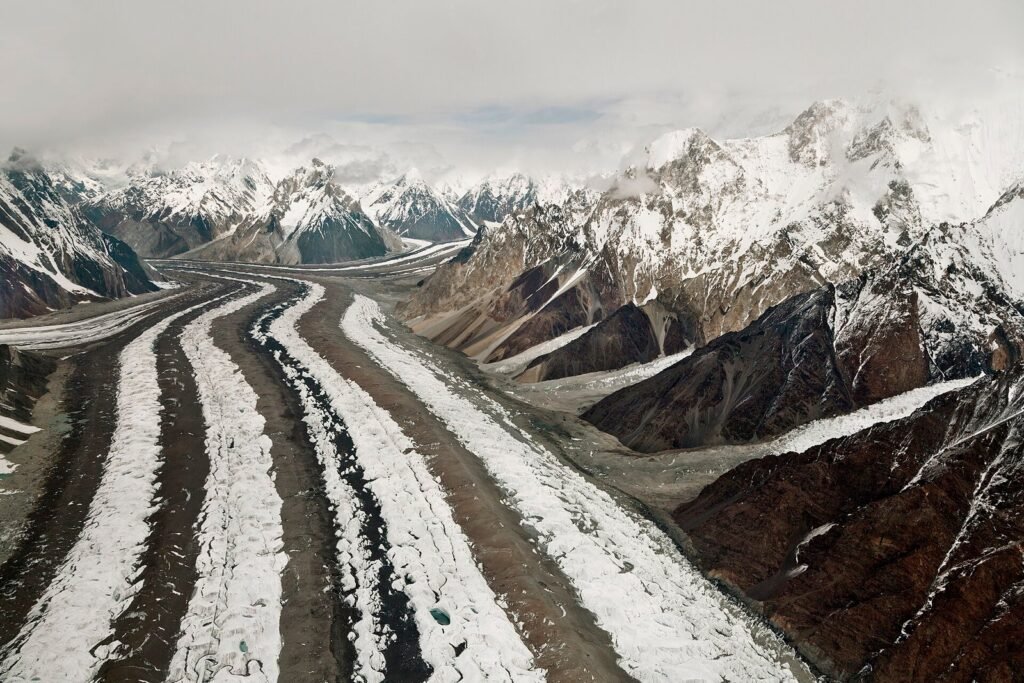
The route, stage by stage
Every operator runs its own itinerary, but the classic out-and-back route follows a clear pattern.
- Askole to Paiju. The first days follow the Braldu River through dry, rocky country, with a crossing near Jhola. Paiju is a traditional rest day and a chance to acclimatize before the glacier.
- Onto the Baltoro Glacier. From Paiju the route climbs onto the glacier's moraine. Camps such as Urdukas give the first big views of Trango Towers and the Cathedral group.
- Toward Concordia. The trail continues past Masherbrum and Gasherbrum IV. Walking on rubble-covered ice is slow, so short distances can take most of a day.
- Concordia and K2 Base Camp. Concordia is the glacier junction where K2, Broad Peak and the Gasherbrums come into view. From there, a day trip or overnight takes you to K2 Base Camp and the memorial for climbers who died on the mountain.
- Return or Gondogoro La. Most groups retrace their steps to Askole. Experienced, fit groups may exit over Gondogoro La to Hushe, which needs a certified guide and suitable conditions.
Build spare days into the plan. Bad weather, an ill team member or a closed jeep road can each cost a day or more.
Choosing a licensed operator
Since the trekking permit goes through an accredited operator, your choice of company is one of the biggest decisions you make. Ask each operator these questions before you pay a deposit:
- Are you licensed with the Pakistan and Gilgit-Baltistan tourism authorities, and can you show the license?
- How many K2 Base Camp trips have you run in the last few seasons, and how many spare days are built into the itinerary?
- What is included: permits, park fees, flights or road transfers, jeeps, porters, cook team, tents and food?
- How are porters paid, insured and equipped?
- What is your plan for altitude sickness and emergency evacuation?
- Can you issue a Letter of Invitation for my visa, and how quickly?
Clear answers in writing protect you and the porters who make the trek possible.
Fitness, altitude and rescue
K2 itself rises to 8,611 m. You will not climb it, but the trek reaches high altitude around Concordia and K2 Base Camp, and many days are spent on rough moraine.
- Fitness. Train for long days on uneven ground with a pack. Previous multi-day treks at altitude are a strong advantage.
- Acclimatization. Good itineraries include rest days. Learn the signs of acute mountain sickness and never ascend with worsening symptoms.
- Rescue. According to CKNP, the realistic rescue option at altitude is a military helicopter, which is costly and needs payment confirmed in advance. Your insurance must clearly cover helicopter rescue at altitude in Pakistan.
- Travel advice. The US State Department mentions K2 in its altitude warning. Read your own government's advice before booking. Our guide Is Pakistan safe for tourists? summarizes it.

Your Pakistan visa for the K2 Base Camp trek
You need a Pakistan visa before you fly, unless your passport is visa exempt. The official Pakistan Online Visa System says GCC citizens do not need a visa, and citizens of 192 countries can apply online. Pakistan suspended its free Visa Prior to Arrival scheme on 1 January 2026, so do not count on arranging anything at the airport.
Which visa category?
For a trek, travelers commonly use the Tourist/Visit entry visa, sub-category "Individual less than 3 months". It is single entry and allows a stay of up to 3 months, which covers a three-week trek with room to spare. Mountaineering expeditions on permit peaks follow their own process, so check with your expedition operator.
Timeline that works
- Four to six months out: choose a licensed operator and dates.
- Two to three months out: apply for your e-Visa. Official processing is 7 to 10 working days, but a "Sent Back for Review" status restarts the clock, and the application is cancelled if not resubmitted within 7 days.
- Four to six weeks out: your operator files the trekking permit using your passport and visa copies.
- Before departure: print your visa, permit papers and insurance documents. Carry several copies.
Check what your country pays on our Pakistan visa fee page. For example, the official single-entry tourist fee for US, UK, Canadian and Australian citizens was US$60 in October 2026. Document details are on our tourist visa requirements page, and if you need to stay longer, see how to extend your Pakistan visa.
Your trek operator can usually provide the Letter of Invitation for your visa. If yours cannot, or you want the visa handled separately, Pakistan Visa Desk includes one from a licensed Pakistan tour operator in our US$149 service.
Packing essentials
- Broken-in trekking boots and camp shoes
- A warm down jacket and a sleeping bag rated well below freezing
- Glacier sunglasses, sun hat, high-SPF sunscreen
- Trekking poles and gaiters
- Water purification and a personal first aid kit, including any altitude medication your doctor recommends
- Copies of passport, visa, permit and insurance in a waterproof bag
- Pakistani rupees in cash for tips and small purchases in Skardu and Askole
Ready to plan your trek?
The K2 Base Camp trek takes time, fitness and good paperwork, and the reward is a view few people ever see. Lock in your season, choose a licensed operator, and get your visa sorted early so permits can follow on time. If you want the visa off your list, apply with us or send us a WhatsApp message with your trek dates.
Frequently asked questions
Do I need a permit for the K2 Base Camp trek?
Yes. The Baltoro is a restricted trekking area, so you need a trekking permit, filed through a licensed Pakistani tour operator, plus Central Karakoram National Park entry. Your operator usually handles both. Allow four to six weeks for the permit after your visa is in hand.
Can I do the K2 Base Camp trek without a guide?
No. The CKNP site states that solo trekking is not allowed in the park's core zone. You need at least one registered porter, and groups of three or more need a registered guide. Technical passes like Gondogoro La require an Alpine Club of Pakistan certified guide.
When is the best time for the K2 Base Camp trek?
Roughly mid-June to early September. Mid-July to August is the peak period with more stable weather. Early season can be unsettled, and first snow at Concordia often arrives in mid to late September. From October to April high-altitude trekking is closed.
Which Pakistan visa do I need for the K2 trek?
Trekkers commonly use the Tourist/Visit entry visa, Individual less than 3 months, which is single entry with a stay of up to 3 months. Climbing a permit peak above 6,500 m follows a separate process, so check with your expedition operator. See our e-Visa guide.
How long does the K2 Base Camp trek take?
Most itineraries take around three weeks from Islamabad, including flights or the road to Skardu, the jeep to Askole, the trek along the Baltoro to Concordia and back, and spare days for weather. Exiting over Gondogoro La changes the route and timing.
How early should I apply for my Pakistan visa for the trek?
Apply two to three months before your trek. Official processing is 7 to 10 working days, but a sent back for review status restarts the clock, and your operator needs your visa copy to file the trekking permit. Check fees on our visa fee page.
Sources: Central Karakoram National Park: permits, season and logistics · ExplorersWeb: Fees and Paperwork for a Karakorum Trek (2020) · US Department of State: Pakistan Travel Advisory · UK FCDO: Pakistan safety and security · Pakistan Online Visa System (official portal) · Pakistan Online Visa System fee structure
Pakistan Visa Desk is a private visa assistance service and is not affiliated with the Government of Pakistan. Visa decisions are made only by the Government of Pakistan. Rules can change, so always check the official portal at visa.nadra.gov.pk before you travel.